A post-AI artist
On Derrick Schultz's visit to AI Greenhouse, the slippery label of 'AI artist', and what it means to work with AI before and after the hype.
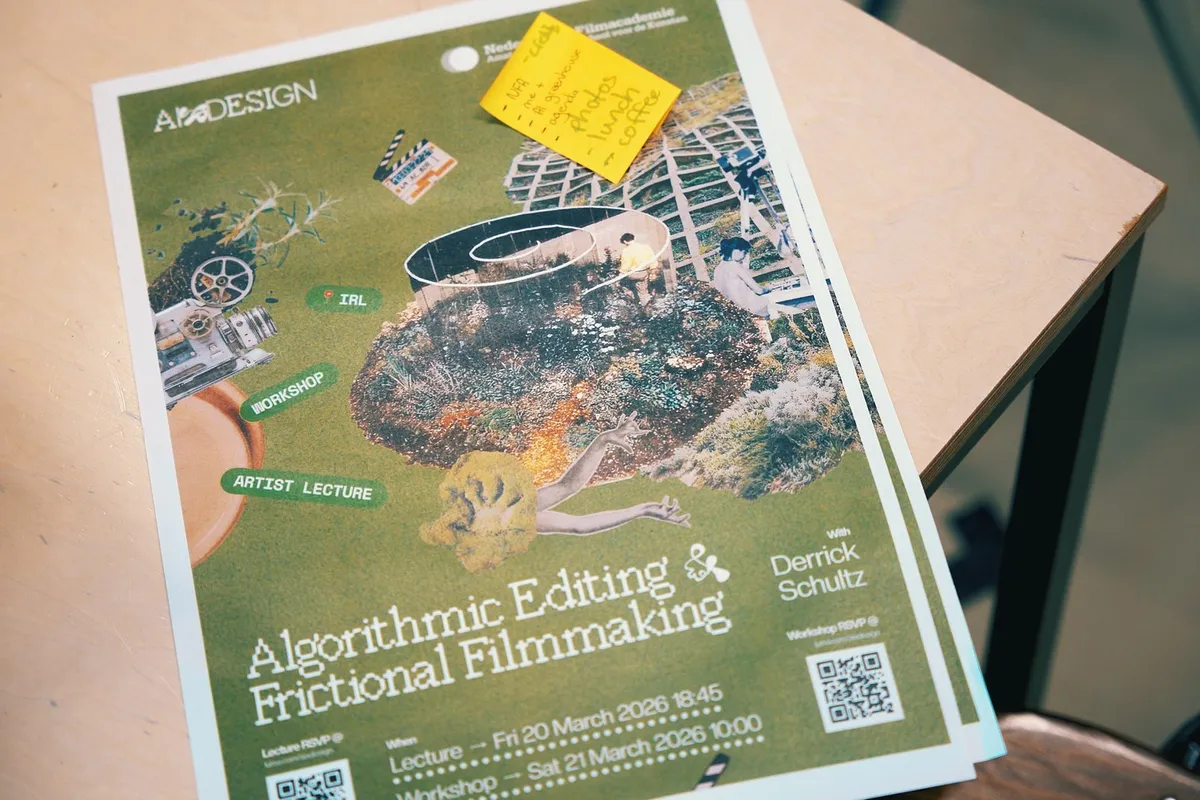
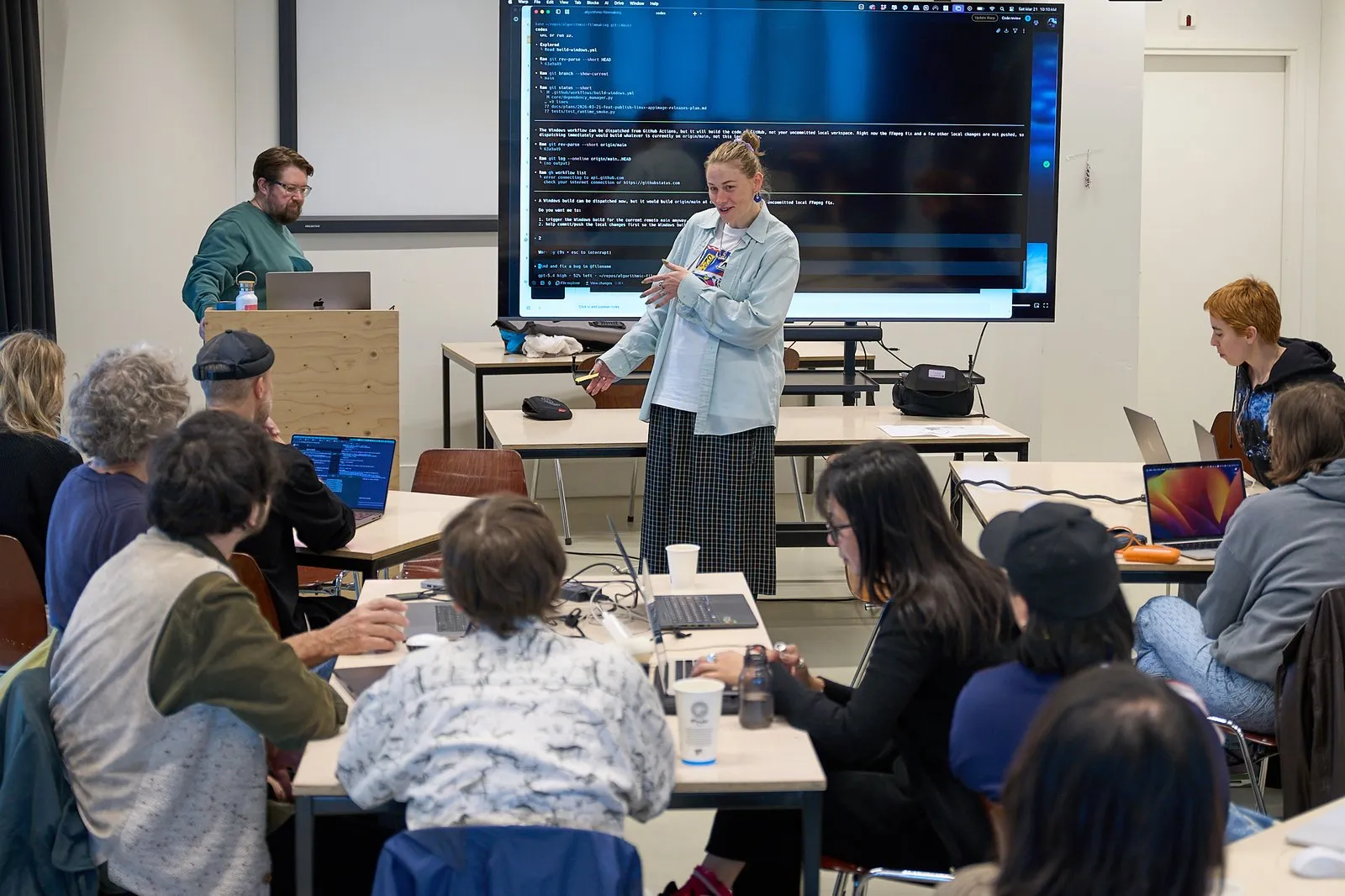
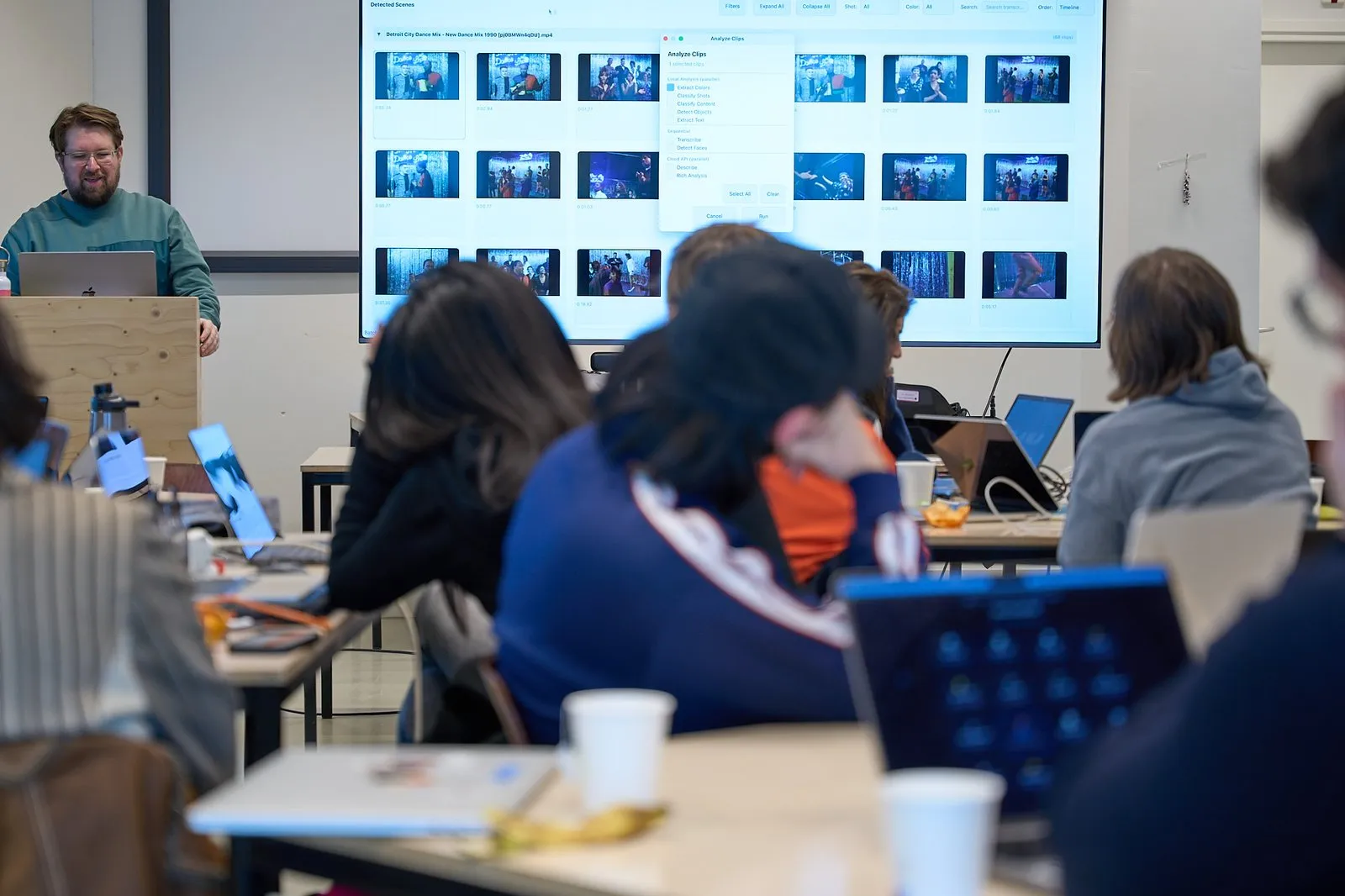
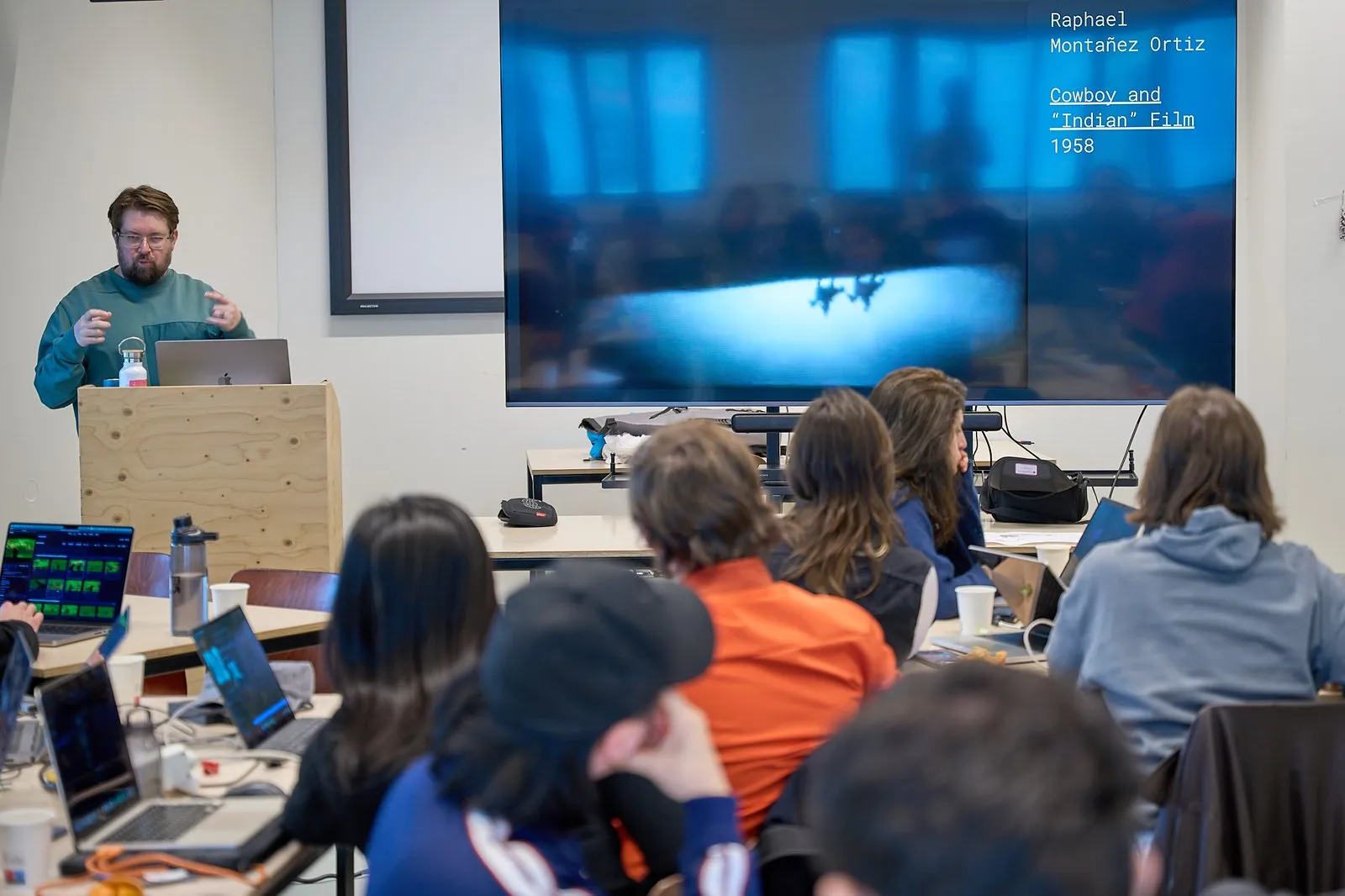
As part of AI Greenhouse, a research project I am leading with Nadia Piet from AIXdesign at the Netherlands Film Academy, we hosted Derrick Schultz as a guest last week.
Derrick is a designer and experimental filmmaker who, over the past decade, has explored AI for video feature extraction, image generation, and animation, among other things. He has taught at NYU Tisch, CalArts, and The New School, and brings the kind of perspective that only comes from having spent a long time working with a technology before it became a trend. That perspective is captured in how he introduces himself: as a post-AI artist.
But what is a post-AI artist?
Trying to answer that question immediately risks missing the point of a more urgent one: what is an AI artist in the first place?
Historically, artists have been defined by the tools they use and the objects they make. A painter produces paintings, a poet writes poems, a graffiti artist creates graffiti, and a filmmaker makes films. Simple. But as we move further into the present — where techniques bleed across physical, digital, social, and networked spaces — artistic works become more relational, and categories more slippery. Duchamp’s Fountain (1917) and Klein’s Zones of Empty Space (1959) were early provocations in this direction. More recently, Hirst’s The Currency (2022) and Herndon and Dryhurst’s Readyweights (2024) push it further still, making explicit what was always implicit: that art’s value has less to do with what it is made of, and more to do with where it sits — economically, politically, discursively.
AI makes this tension impossible to ignore. Unlike paint or film, which have consistent formal properties, AI is not a material. It is not even really a medium. It is an expansive set of technologies capable of producing images, video, text, sound, 3D models — often all at once. As Kate Crawford and Vladan Joler explain in their thorough study of its anatomy, AI’s reach doesn’t stop at the output; it reflects back onto its whole production apparatus: the datasets, the training, the fine-tuning, and the interfaces through which it gets packaged and sold as a tool. AI, as both means and product, is relational all the way down — tangled up in labour, capital, and representation in ways that are genuinely difficult to untangle.
There are many artists dedicating their research and practice to different aspects of AI, and experimenting with it as a tool. But they don’t necessarily build AI systems, nor train them. And their works are not AI systems either. After all, if we were to isolate it from its context, what is AI other than a set of statistical methods powered by computational infrastructure? And if AI is so abstract, how does it materialise into an artwork? If it isn’t clear what an AI artwork is — how it looks, where it lives, in what space it exists — then what does it actually mean to be an AI artist?
The label, as most people use it, was born from a specific and fairly narrow cultural moment. Around 2022, the first widely accessible image generation models — Midjourney, Stable Diffusion — landed in the hands of a small but vocal community of online creators who immediately started posting results. The tools were raw, the interfaces clunky, and the outputs were, even though surprisingly photorealistic, just PNG files. But the process of making them felt like nothing that had existed before. You summoned images by speaking to a machine, and something appeared that would have otherwise taken years of technical training to produce. Anyone with an internet connection could be a wizard. It felt, to a lot of people, like magic — and that feeling was real, even if what was actually happening was statistics, and even if the novelty wore off fast.
Out of that moment came the social media badge: “AI artist since 2022.” A signal that you were there early, that you wandered the latent space before it got crowded, back when the models were unpredictable enough that every output was a small surprise. Some of that work was genuinely interesting — conceptually sharp, imaginatively brave. Some of it looked impressive in ways that borrowed the appearance of technical skill without requiring any. And a lot of it was slop dressed up as discovery. All of it, without much discrimination, got filed under AI art.
It’s worth pausing on that phrase. What most people called “AI art” in that period was, more precisely, AI images: outputs generated from text prompts, quickly iterated, and shared more rapidly still. The distinction matters. And for those curious about where that practice actually comes from — and how much longer its history is compared to what the hype suggests — the FOAM Magazine piece on the history of AI images is worth a look.
Which is exactly why Derrick’s self-description itches a little — in a good way. He was training GANs and other systems well before 2022, working not just on image generation but also on classification and feature extraction. His practice was never waiting for a consumer tool to arrive and make things easy. The “AI artist” label, as it crystallised around that cultural moment, doesn’t suit him, and he’s not pretending otherwise. Calling himself a post-AI artist isn’t a claim to have transcended the technology, but a way of saying that the AI art was already here, before the hype, and the work will always be about something else.